Bees and Solar Power…
BySolar power and bees? Over the past few years, solar farm developers have increasingly been encouraged to transform the space underneath their solar panels into a safe heaven for bees, butterflies, and other endangered pollinators. The question is, how?

Solar PV (photovoltaic) was first discovered in 1839 by French scientist Edmond Becquerel. Over the next 100 years, there were other discoveries and inventions, including several discoveries by Albert Einstein, who received a Nobel Prize for his theories on the photovoltaic effect in 1921. Solar power has been around for a very long time, what we are trying to learn today is how that’s beneficial to us and our environment. Let’s take a closer look at bees and solar power
If we were to take a look at a bee ecosystem, we know that as pollinators, bees play a part in every aspect of the ecosystem. They support the growth of trees, flowers, and other plants, which serve as food and shelter for creatures large and small. Bees contribute to complex, interconnected ecosystems that allow a diverse number of different species to co-exist.
Now what we have to look at is how solar panels affect the something as small but incredibly important such as bees. I think that solar farms should be created because it is beneficial to them.
Minnesota was the first state to adopt voluntary pollinator-friendly solar farm standards in 2016, with a scorecard laying out benchmarks for biodiversity, native plants, and blooming seasons. States across the country followed suit, from Vermont to South Carolina to California. The standards are typically aimed at solar projects that are larger than one acre and tied to the electrical grid. Projects that earn enough points on their state’s scorecard can market themselves as pollinator friendly.
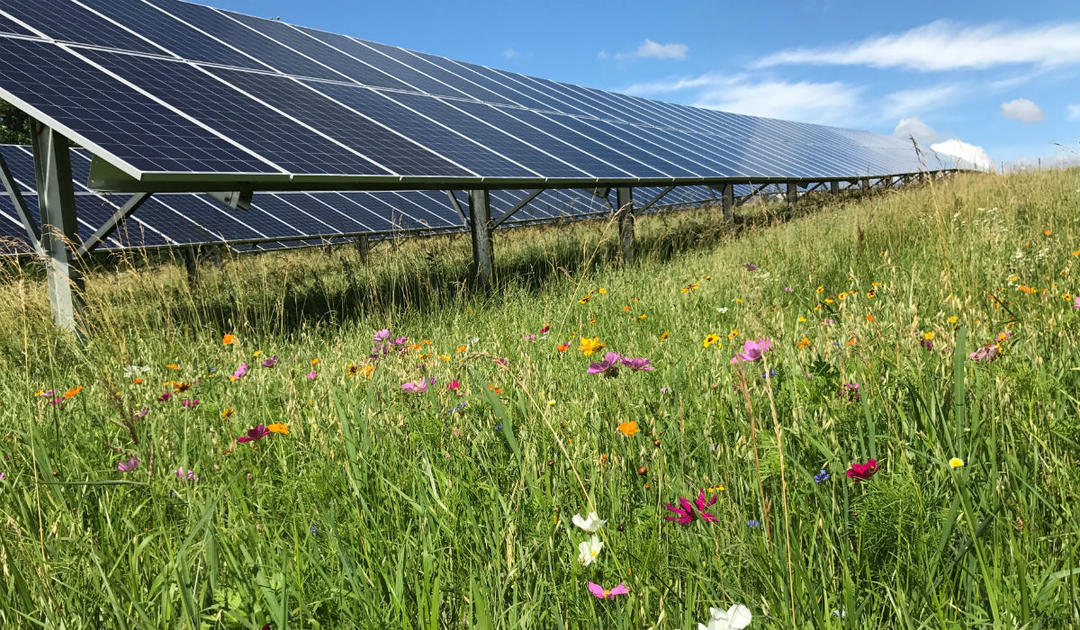
It’s nothing new for traditional farmers and solar farmers to work together to see if they can share a plot of land. This is known as agrivoltaics (the development the same area of land for both solar photovoltaic power as well as for agriculture). Most crops can’t grow under solar arrays because they just don’t get enough light, but there are crops that do fine and maybe even a little better.
When we think of animal agriculture, we don’t often think of insects. In many cases, insects are bad for crops because they’ll destroy the crops, eat them, or end up in the finished product. Bees are a special case, though. By placing beehives near a field, you can increase production by helping move more pollen around, while also ending up with honey that can be sold. It’s a win-win in that case, and it can be a win-win-win if you add solar panels to the mix. Even ground-based panels with little room under them can fit small plants and bees.
When we aren’t talking about domesticated beehives, this availability of plants and flowers is especially important. When we cut down whole fields and leave them bare under a new solar farm, we deprive wild bees and other pollinators of any pollen to make food with. If we instead grow plants of some kind under the panels (even if the main goal is just to cool them off), the availability of food can actually increase in the solar farm’s area and help save wild bee populations from extinction.
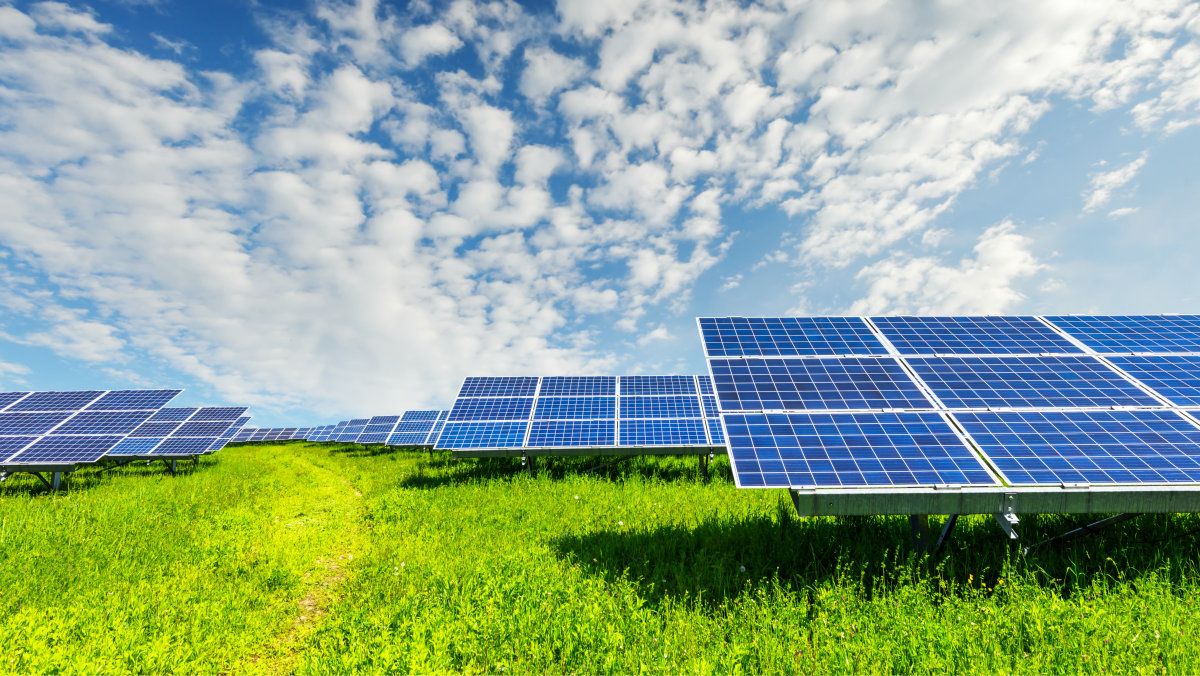
Even if nothing is growing that human can eat, it’s still beneficial for the health of bees and other pollinators (domesticated or wild) to not leave the ground bare under the panels. That may make management easier (no need to deal with weeds, etc.), but it lowers panel efficiency compared to those that have plants beneath them to lower temperatures and increase moisture.
In other words, it’s good for the bees and the panels to have some flowering plants under the panels, especially between the rows where shade will be partial and not full. There’s no reason to not do this.
So, in conclusion planting solar farms is very beneficial to the bees. As it has may pros to it then cons. So, building solar panels are helpful not only to us but the environment in general.
Bibliography
https://www.discovermagazine.com/environment/can-solar-farms-help-save-bees
Keep sharing and keep motivating others.
I like the efforts you have put in this, regards for all the great content.